10 REASONS YOUR OTP STRATEGY IS KILLING SALES (AND HOW TO FIX IT)
Introduction
If you run an online business, you already know this pain.
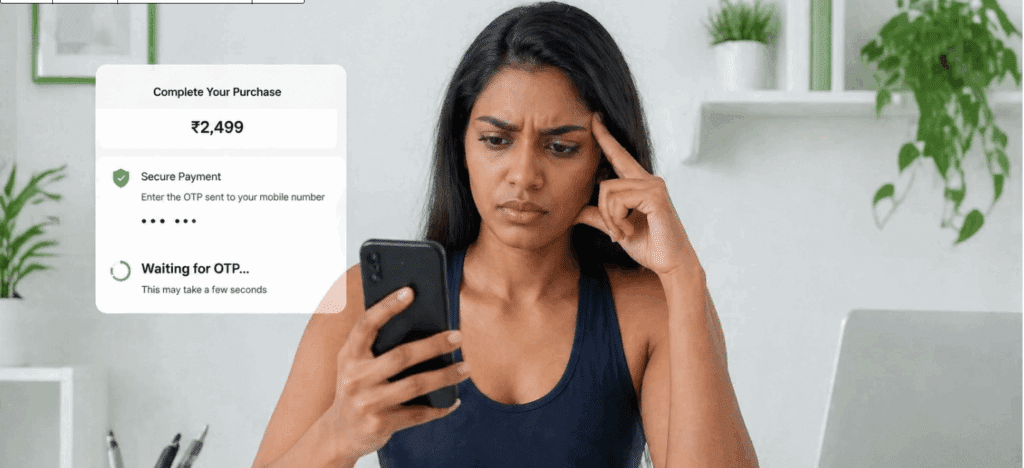
A customer is ready to buy. They’ve added products to cart. They’ve made it all the way to checkout. And then your OTP doesn’t arrive, arrives late, gets ignored, or creates just enough friction for them to give up.
That’s the brutal part: you’re not losing the sale because your product is bad. You’re losing it at the finish line because your verification flow is weak.
Founder to founder, this is one of those silent leaks that kills revenue without showing up clearly enough in your dashboard. It looks like drop-off. It looks like cart abandonment. It looks like “customers changed their mind.” But sometimes, the real problem is your OTP strategy.
Here are 10 reasons SMS OTP can hurt conversions and what to do instead.
Summary
If your OTP flow is built on SMS, you may be losing sales because of delivery failures, delays, weak security, fraud risk, roaming issues, rising costs, app-switching friction, and low trust at the point of verification.
In simple terms: customers are ready to buy, but your authentication step is making the process harder than it should be.
Table of Contents
- 1. network failure
- 2. sms latency
- 3. lack of encryption
- 4. ss7 vulnerabilities
- 5. sim swap fraud
- 6. carrier spam blocks
- 7. roaming restrictions
- 8. high sms costs
- 9. app switching friction
- 10. missing brand trust
- Conclusion
- FAQ
Body
1. network failure
Let’s start with the most obvious issue. SMS still depends heavily on carrier networks, signal strength, and regional uptime. So if your customer is in a weak coverage area, inside a building with poor reception, or simply facing a temporary network issue, your OTP may not reach them in time.
And when that happens, the customer usually doesn’t sit there patiently analyzing telecom infrastructure. They just feel stuck. Then they leave.
As a founder, that’s frustrating because this kind of drop-off is completely disconnected from your product quality, pricing, or offer. You did the hard work of getting the customer to checkout, and then a network dependency ruined the moment.
2. sms latency
Even when SMS works, it often works too slowly. During peak shopping hours, festive sales, or traffic spikes, delays become common. A code that shows up after 20 to 40 seconds may technically be delivered, but from a conversion standpoint, it’s already too late.
Customers at checkout are impatient for a reason. They’re making a live buying decision. Any delay creates doubt, distraction, or irritation. They switch tabs, get interrupted, or decide they’ll “come back later,” which usually means never.
Founder to founder, speed matters more than most teams admit. A slow OTP flow adds friction right at the moment when buying intent is highest.
3. lack of encryption
SMS was never built to be a modern secure authentication channel. It does not offer end-to-end encryption, which means sensitive verification messages travel through a system that isn’t ideal for today’s privacy and security expectations.
Now think about this from the customer’s point of view. If they’re sharing personal data, payment details, or logging into an account, they want the process to feel secure. If your authentication method feels outdated, it chips away at trust, even if they can’t explain the technical reason.
As a business owner, you also carry the reputational risk. Customers may not separate the weakness of SMS from the trustworthiness of your brand. To them, it’s all one experience.

4. ss7 vulnerabilities
This one is more technical, but it matters. The global telecom system behind SMS relies in part on SS7, a legacy signaling protocol with well-documented security issues. Attackers have exploited these vulnerabilities to intercept or redirect messages in certain scenarios.
You may never see this issue daily at checkout, but the bigger point is simple: SMS has structural weaknesses baked into it. That’s not ideal for something as important as user verification.
If you’re scaling a serious brand, especially one handling customer accounts, payments, or repeat purchases, you don’t want to build trust on top of an outdated messaging foundation.
5. sim swap fraud
SIM swap fraud is one of the biggest reasons many businesses are rethinking SMS-based authentication. A fraudster convinces a carrier to move a customer’s number to a new SIM, and suddenly OTPs meant for the real user go to the attacker instead.
That creates a dangerous single point of failure. If your verification depends only on phone-number-based SMS delivery, a compromised SIM can become a compromised account.
For founders, this is more than a security issue. It becomes a customer support issue, a reputation issue, and a retention issue. When customers lose trust in your platform’s safety, winning them back is much harder than preventing the problem in the first place.
6. carrier spam blocks
Here’s another hidden problem: carriers regularly filter or block messages they consider suspicious, high-volume, or promotional in pattern. Even valid OTP messages can get caught in the crossfire.
What makes this painful is how unpredictable it is. One day things work fine. The next day a chunk of your users don’t receive codes, and your team is left guessing whether the issue is with templates, carriers, traffic load, or regional filters.
Founder to founder, unpredictability is expensive. If your login or checkout flow depends on a channel that can quietly throttle deliverability, your conversions are sitting on unstable ground.

7. roaming restrictions
If you sell internationally or serve customers who travel often, SMS OTP becomes even more unreliable. Roaming issues, local carrier limitations, and country-specific telecom behavior can all interfere with delivery.
That means a real customer with real intent can get blocked simply because they’re in another geography at the wrong moment.
For a growing ecommerce brand, that’s a terrible trade-off. You spend to acquire global traffic, build offers for multiple regions, and then risk losing the customer because your authentication channel doesn’t travel well.
8. high sms costs
SMS might look affordable at first, but the cost gets harder to justify at scale, especially across countries. Pricing varies by region, carrier, and volume, and international transactional messaging can get expensive quickly.
Now add the hidden cost of failed deliveries, retries, support complaints, and lost conversions. Suddenly it’s not just a messaging line item. It’s revenue leakage.
As a founder, you want every operational cost tied to measurable performance. If you’re paying more for a channel that converts worse and creates more friction, it’s worth questioning whether it still makes business sense.
9. app switching friction
This is one of the most underestimated issues in the whole OTP journey. A customer is in your app or on your checkout page, then has to leave that flow, open their SMS inbox, find the message, copy the code, come back, and hope the session hasn’t expired.
That tiny interruption sounds harmless until you watch enough customers drop off during it.
People get distracted fast. They see another notification. They accidentally close the tab. They lose the checkout page. Or they simply don’t feel like doing extra work for a purchase that should have been easy.
Founder to founder, reducing context switching is one of the easiest ways to protect conversions.

10. missing brand trust
SMS OTPs often arrive from unknown numbers, generic sender IDs, or short codes that mean nothing to the customer. That creates hesitation right away.
Customers are more alert than ever. If they receive a code from an unfamiliar sender, they may ignore it, question whether it’s legitimate, or feel uneasy about continuing.
And that matters because trust at checkout is fragile. If your verification message doesn’t clearly feel like it comes from your brand, the whole buying experience starts to feel less reliable.
For founders, brand trust is not just about ads and packaging. It also lives in the small transactional moments, especially the ones closest to payment.
THE SOLUTION: WHATSAPP AUTHENTICATION VIA WEBMAXY
- High Deliverability: Utilizing WhatsApp Business API ensures over 99% delivery rates.
- End-to-End Encryption: Secured authentication environment for all transactions.
- Verified Branding: Professional profile display with WhatsApp Store integration.
- Cost Efficiency: predictable pricing compared to international SMS rates.
- Automation: Integrated WhatsApp Automation for instant code generation.
Conclusion
Founder to founder, if customers keep dropping off after they’ve already decided to buy, don’t just blame pricing, product, or traffic quality. Look at the final step.
Your OTP system can either help close the sale or quietly kill it.
If you want a faster, safer, and more conversion-friendly authentication experience, it may be time to move beyond SMS and switch to WhatsApp authentication built for modern commerce.
Ready to reduce checkout drop-offs and recover lost revenue? Explore WebMaxy WhatsApp Business API and see how smarter authentication can turn more buying intent into actual sales.
FAQ: WHATSAPP OTP VS SMS
1. Is WhatsApp OTP more reliable than SMS OTP?
In many cases, yes. WhatsApp authentication offers stronger deliverability, less dependency on traditional carrier bottlenecks, and a smoother experience for users already active on WhatsApp.
2. Is WhatsApp OTP secure?
Yes. WhatsApp messages benefit from end-to-end encryption, which makes the channel better suited for secure authentication compared to standard SMS.
3. Will customers trust WhatsApp OTP more than SMS?
Usually, yes. A verified business presence on WhatsApp feels more recognizable and trustworthy than a random short code or unknown sender ID.
4. Is WhatsApp OTP better for international businesses?
For many global brands, yes. WhatsApp works well across borders and can reduce some of the delivery inconsistency that often affects international SMS.
5. Should businesses completely replace SMS OTP?
That depends on your audience and workflow, but many brands now use WhatsApp as a primary authentication channel or as a stronger fallback option to improve delivery and conversion performance.
© 2026 WebMaxy. All rights reserved. Professional Marketing Technology Solutions.

Adam Wilson
Adam Wilson comes with an experience of 12+ years in the IT industry. As a Customer Success Manager, he has been researching and trying to understand the customers’ behavior in different scenarios. He has also studied human psychology to relate it to the purchase journey of the customers. His published books on customer psychology and behavior have received many honors and awards from various enterprises.