From Chat to Checkout: The 2026 Guide to WhatsApp Store and Payment Integration

Let’s be honest for a second. If you’re still asking your customers to leave a WhatsApp chat, open a browser, log in to your website, find their cart, and then pay… you’re basically asking them to change their mind. In 2026, friction is the ultimate conversion killer.
We’ve all been there: a customer slides into your DMs asking for a price, you send a link, and, crickets. They got a notification from Instagram, their cat did something funny, or they just couldn't be bothered with the three-step checkout. But what if they never had to leave the chat?
Welcome to the era of the WhatsApp Store. We’re talking about a world where "Chat to Checkout" isn't a long journey, it’s a two-tap sprint. In this guide, we’re breaking down how to turn your WhatsApp from a support channel into your most profitable storefront.
Summary
The future of e-commerce is conversational. By 2026, integrating a full WhatsApp Store and native WhatsApp Payment systems has become the gold standard for high-growth brands. This guide covers:
- Setting up a frictionless storefront using the WhatsApp Business API.
- Integrating payment gateways like UPI, Razorpay, and WhatsApp Pay for instant transactions.
- Leveraging WebMaxy’s AI-powered automation to scale without losing the personal touch.
- Preparing for 2026 trends like voice-enabled shopping and hyper-personalized AI recommendations.
Table of Contents
- Why WhatsApp is the New Storefront
- The Anatomy of a WhatsApp Store in 2026
- Frictionless Payments: From UPI to WhatsApp Pay
- WebMaxy: Your Secret Weapon for 60% Revenue Growth
- 2026 Trends: Voice Commerce & AI Personalization
- Setting Up Your Shopify & Wix Integration
- Conclusion
- Frequently Asked Questions
1. Why WhatsApp is the New Storefront
Remember when having a "mobile-responsive" website was the big thing? That was cute. Today, customers don't want "mobile-responsive"; they want "instant."
WhatsApp isn't just an app anymore; it’s an ecosystem. With over 2 billion users globally, your customers are already there. By integrating a WhatsApp Store, you’re meeting them where they’re most comfortable. No more lost passwords, no more "wait, what was my login?", just pure, unadulterated shopping.
For founders, this means lower customer acquisition costs (CAC) and significantly higher retention. When the barrier to purchase is as low as sending a "Yes," your sales numbers start looking very different.
2. The Anatomy of a WhatsApp Store in 2026
A modern WhatsApp Store isn't just a list of products; it’s a dynamic, interactive experience. To do this right, you need the WhatsApp Business API.
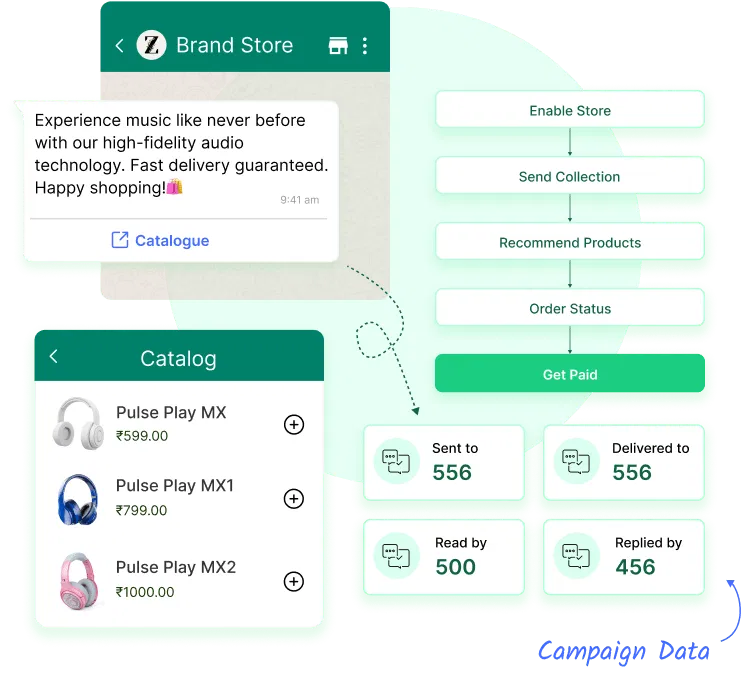
Here’s what makes a high-converting store:
- The Interactive Catalog: Gone are the days of sending blurry PDFs. In 2026, we use multi-product messages and interactive carousels. Customers can browse, select sizes, and add to cart, all within the chat interface.
- Real-time Inventory Sync: Nothing kills a brand's reputation faster than "Oops, out of stock" after someone pays. Your whatsapp ecommerce integration should sync perfectly with your backend.
- The Automated Flow: When a customer asks about a product, your whatsapp automation tools should instantly provide details, reviews, and a "Buy Now" button.
3. Frictionless Payments: From UPI to WhatsApp Pay
This is where the magic happens. Or the tragedy, if you get it wrong.
In 2026, you have three main ways to get paid on WhatsApp:
- Native WhatsApp Pay: In markets like India (UPI) and Brazil (Pix), customers can pay directly using Meta’s own rail. It’s fast, it’s secure, and it feels native.
- Integrated Payment Gateways: For most global businesses, integrating whatsapp marketing software with gateways like Razorpay, PayU, or Stripe is the way to go. You send a "Pay" button, the customer sees a secure checkout sheet (without leaving WhatsApp), and boom, done.
- Payment Links: The "old reliable." Automated systems like WebMaxy can generate unique, pre-filled checkout links for Shopify or Wix and drop them in the chat.
The goal? A "One-Tap" experience. Every extra tap is a 10% chance your customer gets distracted by a TikTok notification.
4. WebMaxy: Your Secret Weapon for 60% Revenue Growth
Look, we’re not just here to chat; we’re here to grow. Brands using WebMaxy see up to 60% revenue growth because we automate the heavy lifting.

How do we do it?
- AI-Powered Chatbots: Our whatsapp chatbot for business doesn't just give canned answers. It understands intent. If a customer says "I need something for a wedding next Friday," the bot suggests items, checks delivery dates, and facilitates the sale.
- Abandoned Cart Recovery: This is our bread and butter. If a customer adds to their WhatsApp cart but disappears, WebMaxy automatically sends a personalized reminder (maybe with a cheeky 5% discount) to bring them back.
- Multi-Agent Dashboard: For when things get complex, your human team can jump into any conversation from a single, unified dashboard.
5. 2026 Trends: Voice Commerce & AI Personalization
If you want to stay ahead of the curve, you need to look at what’s coming next.
Voice-Enabled Commerce
People are getting lazier (or more efficient, depending on how you look at it). In 2026, voice notes are the new text. Customers are sending voice messages like, "Hey, can I get two of those blue shirts I bought last month?"

WebMaxy’s advanced AI transcribes these voice notes, identifies the products in your catalog, and sends back a pre-filled cart for confirmation. It’s like having a personal shopper in your pocket.
Hyper-Personalization
Nobody wants a generic "Buy now!" broadcast. In 2026, AI personalization means your WhatsApp Store knows your customer’s preferences better than they do. By analyzing past purchases and chat history, our AI sends personalized campaigns that actually resonate.
6. Setting Up Your Shopify & Wix Integration
If you’re running on Shopify, Wix, or WooCommerce, you’re in luck. Setting up a WhatsApp Store doesn't require a degree in computer science.
- Connect Your Store: Use WebMaxy to sync your entire product catalog in minutes.
- Configure Workflows: Set up automated triggers for order confirmations, shipping updates, and: most importantly: payment reminders.
- Deploy the Bot: Enable your whatsapp chatbot for business to handle FAQs so your team can focus on closing big deals.
- Launch Ads: Use Click-to-WhatsApp Ads to drive traffic directly into your store.

Conclusion
The transition from "Chat" to "Checkout" is the single biggest opportunity for e-commerce brands in 2026. By removing the friction of external links and complex logins, you’re not just making it easier for your customers to buy: you’re making it impossible for them not to.
Whether you're a scrappy startup or a scaling enterprise, the tools are here. With WebMaxy’s all-in-one engagement platform, you can build a store that works while you sleep.
So, ready to unlock that 60% growth? Let's get your store live.
Frequently Asked Questions
1. Is WhatsApp Pay available for all businesses?
Native WhatsApp Pay (UPI) is currently available in specific regions like India and Brazil. However, businesses globally can use payment gateways like Razorpay, PayU, or Stripe integrated via the WhatsApp Business API to accept payments inside the chat.
2. Can I sync my Shopify catalog with WhatsApp?
Absolutely! WebMaxy offers seamless whatsapp ecommerce integration for Shopify, Wix, and WooCommerce, allowing you to sync inventory, prices, and product descriptions automatically.
3. Do I need a developer to set up a WhatsApp Store?
Not necessarily. Platforms like WebMaxy are designed to be low-code/no-code. You can set up catalogs, automation flows, and payment integrations through our intuitive dashboard.
4. How does voice commerce work on WhatsApp?
In 2026, AI can transcribe voice notes sent by customers. It extracts the intent (e.g., "I want to buy X") and automatically surfaces the correct product from your catalog for the customer to confirm and pay.
5. Is the WhatsApp Business API expensive?
Pricing is typically based on conversation volumes. WebMaxy offers transparent pricing with no hidden markups, making it one of the most cost-effective whatsapp automation tools for growing brands.

Adam Wilson
Adam Wilson comes with an experience of 12+ years in the IT industry. As a Customer Success Manager, he has been researching and trying to understand the customers’ behavior in different scenarios. He has also studied human psychology to relate it to the purchase journey of the customers. His published books on customer psychology and behavior have received many honors and awards from various enterprises.